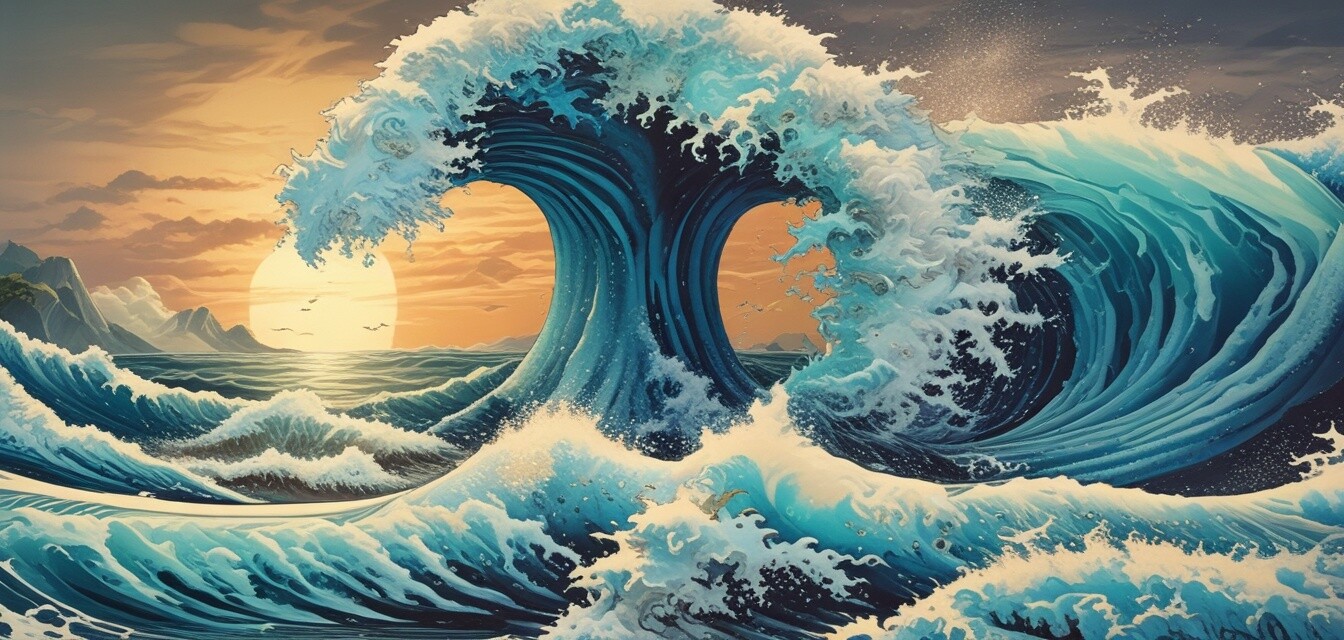
Analyzing the Movement Techniques of Hokusai
- Hokusai's compositions effectively communicate motion and emotion through unique techniques.
- Dynamic lines and perspective shifts are essential elements of Hokusai's style.
- The use of color and form enhances the sense of movement in his artworks.
- Artists can learn from Hokusai to express their own dynamism and emotions in art.
Hokusai, a revered Japanese artist, is known for his incredible ability to depict movement and emotion through his paintings and prints. His works, particularly the famous "Great Wave off Kanagawa," showcase dynamic compositions that inspire artists to capture similar effects in their artwork.
Understanding Hokusai’s Techniques
To truly appreciate Hokusai's artistry, one must explore the various techniques he employed to convey movement. Below, we analyze specific aspects of his work that contribute to the dynamic feel of the compositions.
Dynamic Lines
Hokusai often used sweeping lines that guide the viewer's eye across the canvas. These lines create an illusion of movement, making the viewer feel as if they are part of the scene. Below is a breakdown of types of lines he employed:
| Line Type | Effect |
|---|---|
| Sweeping curves | Conveys the rhythm of waves and wind. |
| Diagonal lines | Imparts a sense of urgency and action. |
| Vertical lines | Creates contrast with horizontal movements, enhancing drama. |
Perspective Shifts
Utilizing unique perspectives, Hokusai invites viewers to engage with the artwork from multiple viewpoints. This technique helps establish depth and movement, as seen in his various landscapes and seascapes.
- Forefront elements often appear larger, enhancing visual dynamism.
- Background elements recede into the distance, allowing for layered effects.
- Viewers feel immersed in the action rather than observing from afar.
Color and Form in Motion
The color palette and forms Hokusai chose also play a pivotal role in expressing movement. Below are key factors contributing to the dynamic nature of his works:
Pros of Hokusai’s Color Use
- Vibrant colors enliven compositions, conveying energy.
- Use of contrast highlights movement against static elements.
- Color gradients create a harmonious sense of flow.
Cons of Hokusai’s Color Use
- Too many colors can distract from the main subjects.
- Bright colors may overwhelm the viewer if not balanced properly.
Hokusai’s Legacy and Its Impact on Artists
Hokusai's dynamic compositions have influenced countless artists and movements throughout history. His ability to portray movement and evoke emotions serves as a teaching tool for aspiring artists. By analyzing his works, artists can implement similar techniques to communicate motion in their own creations.
Practical Applications for Artists
Artists looking to emulate Hokusai's movement techniques can focus on the following:
- Experiment with dynamic lines to guide viewer perception.
- Incorporate varied perspectives to generate a multi-dimensional experience.
- Utilize color strategically to enhance emotional resonance.
 Decorative Wall Art
Wieco Art Great Wave of Kanagawa
Beautifully captures the spirit of Hokusai's iconic wave, this canvas print adds modern elegance to any living space.
Learn MoreConclusion
The techniques employed by Hokusai not only reflect movement but also evoke profound emotions. Artists looking to capture similar effects should explore dynamic lines, perspective, and color use as means to convey life and emotion. By studying and applying Hokusai’s practices, one can add a rich layer of dynamism to their own work.
Further Reading
For more insights into Hokusai and his techniques, consider visiting: